The gravy playbook
Gravy fails at the start, not at the end. This is the order we have watched work on stoves for 140 years, with the bottle coming in last.
The order of operations
Gravy is a roux holding stock. Everything else is decoration.
- Pour off the drippings and keep about two tablespoons of fat in the pan.
- Whisk in an equal spoon of flour and let it cook until it smells like pie crust, two or three minutes.
- Add warm stock a splash at a time, whisking each splash smooth before the next one.
- Simmer until it coats a spoon, salt it, taste it, and only then reach for the bottle.
Why the drops come last
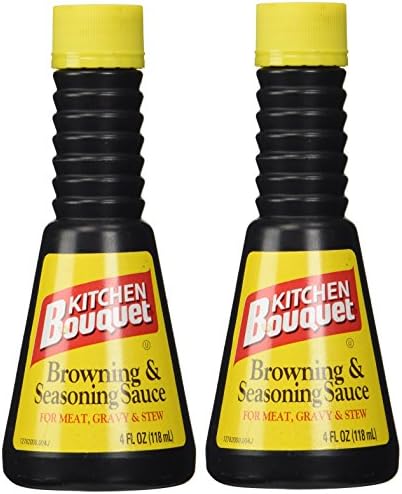
Kitchen Bouquet is a finishing move. Add it early and the simmer cooks off water while the color stays put, so the pot ends up darker than you called for. Add it at the end and what you see is what you serve.
Start with three or four drops for a two-cup pot, stir them all the way through, and look at the back of the spoon before adding more. The shade you want arrives a drop or two sooner than you expect.
Pale gravy, fixed
Roasts cooked in a bag, birds that come out blond, drippings stretched with water: all of them make gravy that tastes fine and looks worried. That is the exact job this bottle was poured for. The taste is already in the pan. The drops bring the color the eye was promised.
When the pot is bigger
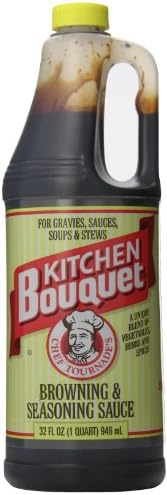
The arithmetic scales in a straight line: about two drops per cup for a warm shade, three for the middle, up to six when you want it deep. Past thirty drops, stop counting and switch to spoons. Seventy-six drops make a teaspoon.
The drop counter runs this math for any pot you type in, and it tells you how many pots the bottle still holds.
Roux, stock, patience, drops. In that order, gravy stops being luck.